Publications
Books

|
Pashler, H. (Editor in Chief) (2013). Encyclopedia of the Mind. (In two volumes). SAGE Publications, Incorporated. Designated one of nine 2014 Outstanding Reference Works by American Library Association |

| Pashler, H. (Editor in Chief) (2001). Stevens Handbook of Experimental Psychology, 3rd Edition. (In four volumes, with volume editors: R. Gallistel, D.Medin, J. Wixted, and S.Yantis). |

| Pashler, H. (Editor) (1998). Attention. Philadelphia: Taylor & Francis Press. |

| Pashler, H. (1998). The Psychology of Attention. Cambridge, MA: MIT Press. |
Practice Guides

Articles
2020
Lau, J.S.-H., Casale, M., Pashler, H. (2020). Mitigating cue competition effects in human category learning Quarterly Journal of Experimental Psychology, 73(7), 983 - 1003 [Abstract] [PDF]
2019
Aczel, B., Szaszi, B., Sarafoglou, A., Kekecs, Z., Kucharský, Š., Benjamin, D., ..., Pashler, H., ..., & Ioannidis, J. P. (2019). A consensus-based transparency checklist. Nature Human Behaviour [Abstract] [PDF]
2018
Pashler, H. & Heriot, G. (2018). Perceptions of newsworthiness are contaminated by a political usefulness bias. Royal Society Open Science, 5, 172239 [Abstract] [PDF]
Schneid, S. D., Pashler, H. & Armour, C. (2018). How much basic science content do second-year medical students remember from their first year? Medical Teacher [Abstract] [PDF]
2017
Tran, R, & Pashler, H. (2017). Learning to exploit a hidden predictor in skill acquisition: Tight linkage to conscious awareness PLoS ONE, 12(6), e0179386 https://doi.org/10.1371/journal.pone.0179386 [Abstract] [PDF]
Tran, R., Vul., E, & Pashler, H. (2017). How effective is incidental learning of the shape of probability distributions? Royal Society Open Science [Abstract] [PDF]
Vul, E. & Pashler, H. (2017). Suspiciously high correlations in brain imaging research Psychological Science Under Scrutiny: Recent Challenges and Proposed Solutions, 196-220 [PDF]
2016
Pashler, H., Rohrer, D., Abramson, I., Wolfson, T., & Harris, C (2016). A Social Priming Data Set With Troubling Oddities Basic and Applied Social Psychology, 38, 3-18. [Abstract] [PDF]
Pashler, H., Rohrer, D., Abramson, I., Wolfson, T., & Harris, C (2016). Response to Comments by Chatterjee, Rose, and Sinha. Basic and Applied Social Psychology, 38, 41-46. http://dx.doi.org/ 10.1080/01973533.2016.1138863 [PDF]
2015
Lew, T., Pashler, H., & Vul, E. (2015). Fragile associations coexist with robust memories for precise details in long-term memory. Journal of Experimental Psychology: Learning Memory and Cognition, http://dx.doi.org/10.1037/xlm0000178 [Abstract] [PDF]
Pan, S. C., Pashler, H., Potter, Z. E., & Rickard, T. C. (2015). Testing enhances learning across a range of episodic memory abilities. Journal of Memory and Language, 83, 53-61. [Abstract] [PDF]
Pashler, H., Bjork, R., McDaniel, M., & Rohrer, D. (2015). Book Review: Comment on Sternberg’s Review of Zhang [Review of The Malleability of Intellectual Styles]. The American Journal of Psychology, 128, 122–125. http://doi.org/10.5406/amerjpsyc.128. 1.0122 [PDF]
Rohrer, D., Pashler, H., & Harris, C.R. (2015). Do subtle reminders of money change people’s political views? Journal of Experimental Psychology: General, 144, e73-e85. [Abstract] [PDF]
2014
Harris, C.R., Pashler, H., & Mickes, L. (2014). Elastic analysis procedures--An incurable (but preventable) problem in the fertility effect literature: Comment on Gildersleeve, Haselton, & Fales (2013) Psychological Bulletin, 140, 1260-1264. [Abstract] [PDF]
Jang, Y., Pashler, H., & Huber, D. (2014). Manipulations of choice familiarity in multiple-choice testing support a retrieval practice account of the testing effect. Journal of Educational Psychology , 106, 435-447. doi:http://dx.doi.org/10.1037/a0035715 [Abstract] [PDF]
Kang, S. H. K., & Pashler, H. (2014). Is the benefit of retrieval practice modulated by motivation? Journal of Applied Research in Memory and Cognition, 3, 183-188. [Abstract] [PDF]
Kang, S. H. K., Lindsey, R., Mozer, M. C., & Pashler, H. (2014). Retrieval practice over the long term: Should spacing be expanding or equal-interval? Psychonomic Bulletin & Review., 21, 1544–1550. [Abstract] [PDF]
Lindsey, R. V., Shroyer, J. D., Pashler, H., & Mozer, M. C. (2014). Improving students’ long-term knowledge retention through personalized review. Psychological Science, 25, 639-647 [Abstract] [PDF]
Strobach, T., Schubert, T., Pashler, H., & Rickard, T. (2014). The specificity of learned parallelism in dual memory retrieval. Memory and Cognition, 42, 552-569, DOI:10.3758/s13421-013-0382-x [Abstract] [PDF]
Tran, R., Rohrer, D. & Pashler, H. (2014). Retrieval practice: The lack of transfer to deductive inferences Psychonomic Bulletin & Review, DOI 10.3758/s13423-014-0646-x [Abstract] [PDF]
2013
Gaspelin, N., Ruthruff, E., & Pashler, H. (2013). Divided attention: An undesirable difficulty in memory retention. Memory & Cognition, DOI 10.3758/s13421-013-0326-5 [Abstract] [PDF]
Harris CR, Coburn N, Rohrer D, Pashler H (2013). Two failures to replicate high-performance-goal priming effects. PLoS ONE, 8, e72467. doi:10.1371/journal.pone.0072467 [Abstract] [PDF]
Kang, S.H.K., Gollan, T.H., Pashler, H. (2013). Don’t just repeat after me: Retrieval practice is better than imitation for foreign vocabulary learning. Psychonomic Bulletin and Review, DOI 10.3758/s13423-013-0450-z [Abstract] [PDF]
McDaniel, M.A., Fadler, C., & Pashler, H. (2013). Effects of spaced versus massed training in function learning. Journal of Experimental Psychology: Learning, Memory, & Cognition, doi: 10.1037/a0032184 [Abstract] [PDF]
Pashler, H. & Mozer, M.C. (2013). When does fading enhance perceptual category learning? Journal of Experimental Psychology: Learning, Memory, & Cognition., doi: 10.1037/a0031679 [Abstract] [PDF]
Pashler, H., Kang, S.H.K., & Ip, R. (2013). Does multitasking impair studying? Depends on timing. Applied Cognitive Psychology, doi: 10.1002/acp.2919 [Abstract] [PDF]
Pashler, H., Kang, S.H.K., & Mozer, M.C. (2013). Reviewing erroneous information facilitates memory updating. Cognition, 128, 424-430. [Abstract] [PDF]
Pashler, H., Rohrer, D. & Harris, C. (2013). Can the goal of honesty be primed? Journal of Experimental Social Psychology, 49, 959-964. [Abstract] [PDF]
Strobach, T., Liepelt, R., Pashler, H., Frensch, P. A., & Schubert, T (2013). Effects of extensive dual-task practice on processing stages in simultaneous choice tasks. Attention, Perception, & Psychophysics, 1-21, DOI: 10.3758/s13414-013-0451-z [Abstract] [PDF]
2012
Carpenter, S.K., Cepeda, M.J., Rohrer D., Kang S.H., & Pashler, H. (2012). Using spacing to enhance diverse forms of learning: Review of recent research and implications for instruction. Educational Researcher, 24, 369-378 [Abstract] [PDF]
Huang, L., & Pashler, H. (2012). Distinguishing different strategies of across-dimension attentional selection. Journal of Experimental Psychology-Human Perception and Performance, 38, 453-464 [Abstract] [PDF]
Kang, S.H.K, & Pashler, H. (2012). Learning painting styles: Spacing is advantageous when it promotes discriminative contrast. Applied Cognitive Psychology, 26, 97-103. [Abstract] [PDF]
Pashler, H. & Harris, C. (2012). Is the replicability crisis overblown? Three arguments examined. Perspectives on Psychological Science, 7, 531-536 [Abstract] [PDF]
Pashler, H., & Wagenmakers, E. J. (2012). Editors’ introduction to the special section on replicability in psychological science: A crisis of confidence? Perspectives on Psychological Science, 7, 528-530. [PDF]
Pashler, H., Coburn, N., and Harris, C. (2012). Priming of social distance? Failure to replicate effects on social and food judgements. PloS ONE, 7(8):, e42510 [Abstract] [PDF]
Rohrer, D., & Pashler, H. (2012). Learning styles: Where’s the evidence? Medical Education, 46, 34-35. [PDF]
Vul, E. and Pashler, H. (2012). Voodoo and circularity errors. NeuroImage, 62, 945-948. [Abstract] [PDF]
2011
Kamienkowski, J.E., Pashler, H., Dahaene, S., and Sigman, M. (2011). Effects of practice on task architecture: Combined evidence from interference experiments and random-walk models of decision making. Cognition, 119, 81-95. [Abstract] [PDF]
Kang, S. H. K., Pashler, H., Cepeda, N. J., Rohrer, D., Carpenter, S. K., & Mozer, M. C. (2011). Does incorrect guessing impair fact learning? Journal of Educational Psychology, 103, 48-59. [Abstract] [PDF]
Kang, S.H.K, McDaniel, M.A., & Pashler, H. (2011). Effects of testing on learning of functions. Psychonomic Bulletin and Review, 18, 998-1005. [Abstract] [PDF]
Remington, R., Wu, S., & Pashler, H. (2011). What determines saccade timing in eye-hand sequences? Psychonomic Bulletin and Review, 18, 538-543. [Abstract] [PDF]
2010
Franco-Watkins, A., Rickard, T., and Pashler, H. (2010). Taxing Executive Processes Does Not Necessarily Increase Impulsive Decision Making. Experimental Psychology, 57, 193-201. [Abstract] [PDF]
Holcombe, A.O., Pashler, H. (2010). Online Evidence Charts to Help Students Systematically Evaluate Theories and Evidence Proceedings of the UniServe Science Annual Conference, Sydney, 2010 Preprint [Abstract] [PDF]
Lindsey, R., Lewis, O., Pashler, H., & Mozer M. C. (2010). Predicting students' retention of facts from feedback during study. In S. Ohlsson & R. Catrambone (Eds.) Proceedings of the 32nd Annual Conference of the Cognitive Science Society., Austin, TX: Cognitive Science Society. [Abstract] [PDF]
Rohrer, D. and Pashler, H. (2010). Recent Research on Human Learning Challenges Conventional Instructional Strategies. Educational Researcher , 39, 406-412. [Abstract] [PDF]
Ruthruff, E., & Pashler, H. (2010). Mental timing and the central attentional bottleneck. In A. C. Nobre & J. T. Coull (Eds.) Attention and Time., (pp.123-135), Oxford University Press. [Abstract] [PDF]
2009
*Vul, E., Harris C., Winkielman, P., & Pashler, H. (2009). Puzzlingly high correlations in fMRI studies of emotion, personality, and social cognition. *The paper formerly titled: Voodoo Correlations in Social Neuroscience. Perspectives on Psychological Science, 4, 274-290. [Abstract] [PDF]
*Vul, E., Harris C., Winkielman, P., & Pashler, H. (2009). Reply to comments on Puzzlingly high correlations in fMRI studies of emotion, personality, and social cognition. Perspectives on Psychological Science., 4, 320-324 [Abstract] [PDF]
Carpenter, S. K., Pashler, H., & Cepeda, N. J. (2009). Using tests to enhance 8th grade students' retention of U. S. history facts. Applied Cognitive Psychology, 23, 760-771 [Abstract] [PDF]
Cepeda, N, Coburn, N, Rohrer, D, Wixted, J, Mozer, M, & Pashler, H, (2009). Optimizing distributed practice: Theoretical analysis and practical implications. Experimental Psychology, 56, 236-246 [Abstract] [PDF]
Pashler H., Mcdaniel M., Rohrer D., Bjork R. (2009). Learning Styles: Concepts and Evidence Psychological Science in the Public Interest, 9, 105–119. [PDF]
2008
Carpenter, S., Pashler, H., Wixted, J., Vul, E. (2008). The effects of tests on learning and forgetting. Memory & Cognition, 36, 438-448 [Abstract] [PDF]
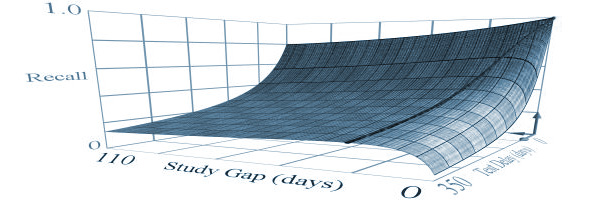
Cepeda, N, Vul, E, Rohrer, D, Wixted, J, & Pashler, H. (2008). Spacing effect in learning: A temporal ridgeline of optimal retention. Psychological Science, 19, 1095-1102 [Abstract] [PDF]
Levy, J., Pashler, H. (2008). Task prioritization in multitasking during driving: Opportunity to abort a concurrent task does not insulate braking responses from dual-task slowing. Applied Cognitive Psychology, 22, 507-525 [Abstract] [PDF]
Mozer, M., Pashler, H., & Homaei, H. (2008). Optimal predictions in everyday cognition: The wisdom of individuals or crowds? Cognitive Science, 32, 1133-1147 [Abstract] [PDF]
Pashler, H., Harris, C., Nuechterlein, K. (2008). Does the central bottleneck encompass voluntary selection of hedonically-based choices? Experimental Psychology, 55, 313-321 [Abstract] [PDF]
Rickard, T., Lau, J., & Pashler, H. (2008). Spacing and the transition from calculation to retrieval. Psychonomic Bulletin & Review, 15, 656-661. [Abstract] [PDF]
Vul, E. & Pashler, H. (2008). Measuring the crowd within: probabilistic representations within individuals. Psychological Science, 19(7), 645-647 [PDF]
2007
Becker, M., Pashler, H. & Lubin, J. (2007). Object-intrinsic oddities draw early saccades. Journal of Experimental Psychology: Human Perception and Performance, 33, 20-30 [Abstract] [PDF]
Carpenter, S., Pashler, H. (2007). Testing beyond words: Using tests to enhance visuospatial map learning. Psychonomic Bulletin & Review, 14, 474-478 [Abstract] [PDF]
Huang, L. & Pashler, H. (2007). Working memory and the guidance of visual attention: Consonance-driven orienting. Psychonomic Bulletin & Review, 14, 148-153 [Abstract] [PDF]
Huang, L. & Pashler, H. (2007). A boolean map theory of visual attention. Psychological Review, 114, 599-631 [Abstract] [PDF]
Huang, L., Treisman, A., Pashler, H. (2007). Characterizing the limits of human visual awareness. Science, 317, 823-825 [Abstract] [PDF]
Jones, J. and Pashler, H. (2007). Is the Mind Inherently Forward-Looking? Comparing Prediction and Retrodiction. Psychonomic Bulletin & Review, 14, 295-300 [Abstract] [PDF]
Pashler, H., Rohrer, D., Cepeda, N., & Carpenter, S. (2007). Enhancing learning and retarding forgetting: Choices and consequences. Psychonomic Bulletin & Review, 14, 187-193 [Abstract] [PDF]
Rohrer, D. & Pashler, H. (2007). Increasing retention without increasing study time. Current Directions in Psychological Science, 16, 4, 183-186 [Abstract] [PDF]
Vul, E. & Pashler, H. (2007). Incubation benefits only after people have been misdirected. Memory and Cognition, 35, 701-710 [Abstract] [PDF]
2006
Carpenter, S., Pashler, H., & Vul, E (2006). What Types of Learning are Enhanced by a Cued Recall Test? Psychonomic Bulletin & Review, 13, 826-830 [Abstract] [PDF]
Cepeda, N J, Pashler, H, Vul, E, Wixted, J, & Rohrer, D (2006). Distributed practice in verbal recall tasks: A review and quantitative synthesis. Psychological Bulletin, 132, 354-380 [Abstract] [PDF]
Dell'Acqua, R., Sessa, P., & Pashler, H. (2006). A neuropsychologial assessment of dual-task costs in closed-head injury patients using Cohen's effect size estimation method. Psychological Research, 70, 553-561 [Abstract] [PDF]
Franco-Watkins, A., Pashler,H., and Rickard, T. (2006). Does working memory load lead to greater impulsivity? Commentary on Hinson, Jameson, and Whitney Journal of Experimental Psychology: Learning, Memory, and Cognition, 32 (2), 443-447 [Abstract] [PDF]
Levy, J., Pashler, H, & Boer, E (2006). Central Interference in Driving: Is There Any Stopping the Psychological Refractory Period? Psychological Science, 17, 3, 228-235 [Abstract] [PDF]
Nuechterlein, K., Pashler, H., Subotnik, K. (2006). Translating basic attentional paradigms to schizophrenia research: Reconsidering the nature of the deficits. Development and Psychopathology, 18, 831-851 [Abstract] [PDF]
Pashler, H., Ramachandran, V.S., & Becker, M.W. (2006). Attending to a Misoriented Word Causes the Eyeball to Rotate in the Head. Psychonomic Bulletin & Review, 13, 954-957 [Abstract] [PDF]
2005
Becker, M.W., & Pashler, H. (2005). Awareness of the continuously visible: Information acquisition during preview. Perception & Psychophysics, 67, 1391-1403 [PDF]
Harris, C. & Pashler, H. (2005). Enhanced Memory for Negatively Emotionally Charged Pictures Without Selective Rumination. Emotion, Vol 5(2), 191-199 [Abstract] [PDF]
Huang, L, and Pashler, H (2005). Attention Capacity and Task Difficulty in Visual Search. Cognition, 94, B101-B111 [Abstract] [PDF]
Huang, L, and Pashler, H (2005). Expectation and repetition effects in searching for featural singletons in very brief displays. Perception & Psychophysics, 67 (1), 150-157 [Abstract] [PDF]
Huang, L. & Pashler, H (2005). Quantifying object salience by equating distractor effects. Vision Research, 45, 14, 1909-1920 [Abstract] [PDF]
Pashler, H., Cepeda, N., Wixted, J., & Rohrer, D. (2005). When does feedback facilitate learning of words? Journal of Experimental Psychology: Learning, Memory, and Cognition, 31, 3-8 [Abstract] [PDF]
Rohrer, D, Taylor, K, Pashler, H, Wixted, J, and Cepeda, N J (2005). The effect of overlearning on long-term retention. Applied Cognitive Psychology, 19, 361-374 [Abstract] [PDF]
2004
Harris, C., & Pashler, H. (2004). Attention and the processing of emotional words and names: Not so special after all. Psychological Science, 15, 171-178 [Abstract] [PDF]
Harris, C., Pashler, H., & Coburn, N. (2004). Moray revisited: High-priority affective stimuli and visual search. Quarterly Journal of Experimental Psychology, 57A, 1-31 [Abstract] [PDF]
Huang, L, Holcombe, AO and Pashler, H (2004). Repetition priming in visual search: Episodic retrieval, not feature priming, Memory & Cognition, 32, 12-20 [Abstract] [PDF]
Huang, L., Pashler, H, and Junge, J (2004). Are there capacity limitations in symmetry perception? Psychonomic Bulletin & Review, 11 (5), 862-869 [Abstract] [PDF]
Mozer, M. C., Howe, M., & Pashler, H. (2004). Using testing to enhance learning: A comparison of two hypotheses. Proceedings of the Twenty Sixth Annual Conference of the Cognitive Science Society, (pp. 975-980). Hillsdale, NJ: Erlbaum Assoccciates [Abstract] [PDF]
Pashler, H. Dobkins, K, & Huang, L. (2004). Is contrast just another feature for visual selective attention? Vision Research, 44, 1403-1410 [Abstract] [PDF]
2003
Dell'Acqua, R., Pashler, H., & Stablum, F. (2003). Multitasking costs in closed-head injury patients. A fine-grained analysis. Experimental Brain Research, 152, 29-41 [Abstract] [PDF]
Pashler, H., Zarow, G., and Triplett, B. (2003). Is temporal spacing of tests helpful even when it inflates error rates? Journal of Experimental Psychology: Learning, Memory, & Cognition, 29, 1051-1057 [Abstract] [PDF]
Rohrer, D., & Pashler, H. (2003). Concurrent task effects on memory retrieval: A cumulative latency analysis. Psychonomic Bulletin & Review, 10, 96-103 [Abstract] [PDF]
Ruthruff, E., Pashler, H., & Hazeltine, E. (2003). Dual-task interference with equal task emphasis: Graded capacity sharing or central postponement? Perception & Psychophysics, 65, 801-816 [Abstract] [PDF]
2002
Becker, M. & Pashler, H (2002). Volatile visual representations: Failing to detect changes in recently processed information. Psychonomics Bulletin & Review, 9, 744-750 [Abstract] [PDF]
Ferreira, V., & Pashler, H. (2002). Central bottleneck influences on the processing stages of word production. Journal of Experimental Psychology: Human Learning and Memory, 28, 1187-1199 [Abstract] [PDF]
Huang, L. & Pashler, H. (2002). Symmetry detection and visual attention: a "binary-map" hypothesis. Vision Research, 42, 1421-1430 [Abstract] [PDF]
Pashler, H., Mozer, M., & Harris, C. (2002). Mating strategies in a Darwinian microworld: Simulating the consequences of female reproductive refractoriness. Adaptive Behavior, 9, 5-15 [Abstract] [PDF]
Roberts, S., & Pashler, H. (2002). Reply to Rodgers and Rowe Psychological Review, American Psychological Assn: US 2002 Jul. 109 (3), 605 [Abstract] [PDF]
2001
Kunimoto, C., Miller, J., & Pashler, H. (2001). Confidence and accuracy of near-threshold discrimination responses. Consciousness and Cognition, 10, 294-31 [Abstract] [PDF]
Levy, J., & Pashler, H. (2001). Is dual-task slowing instruction dependent? Journal of Experimental Psychology: Human Perception and Performance, 27, 4, 862-869 [Abstract] [PDF]
Pashler, H. (2001). Perception and production of brief durations: Beat-based versus interval-based timing. Journal of Experimental Psychology: Human Perception and Performance, 27, 485-493 [Abstract] [PDF]
Pashler, H. (2001). Involuntary orienting to flashing distractors in delayed search? In Charles L. Folk and Bradley Gibson (Eds.) Attraction, distraction and action: Multiple perspectives on attentional capture, (Vol. 133), Access Online via Elsevier Science, 77-92 [Abstract] [PDF]
Pashler, H., & Harris, C. (2001). Spontaneous allocation of visual attention: Dominant role of Uniqueness. Psychonomic Bulletin and Review, 8, 4, 747-752 [Abstract] [PDF]
Pashler, H., Johnston, J., & Ruthruff, E. (2001). Attention and Performance. In Annual Review of Psychology, 52, 629-651 [Abstract] [PDF]
Ruthruff, E. & Pashler, H. E. (2001). Perceptual and Central Interference in Dual-Task Performance. In Kimron Shapiro (Ed.), Temporal Constraints on Human Information Processing, Oxford University Press, 100-123 [Abstract] [PDF]
Ruthruff, E., Pashler, H. E. & Klaassen, A. (2001). Processing bottlenecks in dual-task performance: Structural limitation or voluntary postponement? Psychonomic Bulletin and Review, 8, 73-80 [Abstract] [PDF]
2000
Awh, E. & Pashler, H. (2000). Evidence for split attentional foci. Journal of Experimental Psychology: Human Perception & Performance, 26, 834-846 [Abstract] [PDF]
Becker, M., Pashler, H., and Anstis, S. (2000). The role of iconic memory in change-detection task. Perception, 29, 273-286 [Abstract] [PDF]
Pashler, H. (2000). Task switching and multitask performance. In Monsell, S., and Driver, J. Attention and Performance, XVIII: Control of mental processes. Cambridge, MA: MIT Press [Abstract] [PDF]
Roberts, S., & Pashler, H. (2000). How persuasive is a good fit? A comment on theory testing. Psychological Review, 107, 358-367 [Abstract] [PDF]
1999
Bichot N. P., Cave, K.R., & Pashler H (1999). Visual selection mediated by location: Feature-based selection of noncontiguous locations. Perception & Psychophysics, 61, 403-23 [Abstract] [PDF]
Morales, D., & Pashler, H. (1999). Attention and perception of color symmetry. Nature, May 13, 399 (6732), 115-116 [Abstract] [PDF]
Pashler, H., & Shiu, L-P. (1999). Do images involuntarily trigger search? A test of Pillsbury's hypothesis. Psychonomic Bulletin and Review, 6, 445-448 [Abstract] [PDF]
1998
Pashler, H., & Johnston, J. C. (1998). Attentional limitations in dual-task performance. In H. Pashler (Ed.), Attention, Psychology Press/Erlbaum (Uk) Taylor & Francis, Hove, England, 155-189 [Abstract] [PDF]
Rohrer, D., Pashler, H., & Etchegaray, J. (1998). When two memories can and cannot be retrieved concurrently. Memory & Cognition, 26, 731-739 [Abstract] [PDF]
1996
Pashler, H. & Carrier, M. (1996). Structures, processes and flow of information. In Bjork, E., & Bjork, R. (Eds.), Memory. Handbook of perception and cognition (2nd ed.), San Diego: Academic Press, Inc. xxii, 586 pp. Pp. 3 - 29 [Abstract]
1995
Carrier, M. & Pashler, H. (1995). Attentional limits in memory retrieval. Journal of Experimental Psychology: Learning Memory and Cognition, 21, 1339-1348 [Abstract] [PDF]
Cave, K., & Pashler, H. (1995). Visual selection mediated by location: Selecting successive visual objects. Perception & Psychophysics, 57, 421-432 [Abstract] [PDF]
Fagot, C., & Pashler, H. (1995). Repetition blindness: Perception or Memory Failure? Journal of Experimental Psychology: Human Perception and Performance, 21, 275-292 [Abstract] [PDF]
Harris, C. R. & Pashler, H. E. (1995). Evolution and human emotions. Psychological Inquiry, 6, 44-46 [Abstract] [PDF]
Levy, J., & Pashler, H. (1995). Does perceptual analysis continue during selection and production of a response? Acta Psychologica, 90, 245-260 [Abstract] [PDF]
Pashler, H. (1995). Attention and visual perception: Analyzing divided attention. In D.N. Osdherson & S. Kosslyn (Eds.), Visual cognition: An invitation to cognitive science, Cambridge, MA: MIT Press, 71-100. [Abstract] [PDF]
Shiu, L-P. & Pashler, H. (1995). Spatial attention and vernier acuity. Vision Research, 35, 337-343 [Abstract] [PDF]
1994
Pashler, H. (1994). Overlapping mental operations in serial performance with preview. Quarterly Journal of Experimental Psychology, 47, 161-191 [Abstract] [PDF]
Pashler, H. (1994). Graded capacity sharing in dual-task interference? Journal of Experimental Psychology: Human Perception and Performance, 20, 330-342 [Abstract] [PDF]
Pashler, H. (1994). Dual-task interference in simple tasks: Data and theory. Psychological Bulletin, 116, 220-244 [Abstract] [PDF]
Pashler, H. (1994). Divided attention: Storing and classifying briefly presented objects. Psychonomic Bulletin and Review, 1, 115-118 [Abstract] [PDF]
Pashler, H. (1994). Comment on McLeod and Hume, Overlapping Mental Operations in Serial Performance with Preview: Typing. Quarterly Journal of Experimental Psychology, 47A, 201-205 [Abstract] [PDF]
Pashler, H., Luck, S. J., Hillyard, S. A., Mangun, G. R. & Gazzaniga, M. (1994). Sequential operation of disconnected cerebral hemispheres in split-brain patients. Neuroreport, 5, 2381-2384 [Abstract] [PDF]
Shiu, L-P. & Pashler, H. (1994). Negligible effect of spatial precuing in identification of single digits. Journal of Experimental Psychology: Human Perception and Performance, 20, 1037-1054 [Abstract] [PDF]
1993
Pashler, H. (1993). Doing two things at the same time. American Scientist, Jan-Feb, 47-56 [Abstract] [PDF]
Pashler, H., & O'Brien, S. (1993). Dual-task interference and the cerebral hemispheres. Journal of Experimental Psychology: Human Perception and Performance, 19, 315-330 [Abstract] [PDF]
Pashler, H., Carrier, M., & Hoffman, J. (1993). Saccadic eye movements and dual-task interference. Quarterly Journal of Experimental Psychology, 46, 51-82 [Abstract] [PDF]
1992
Carrier, M., & Pashler, H. (1992). The influence of retrieval on retention. Memory and Cognition, 20, 632-642 [Abstract] [PDF]
Fagot, C. & Pashler, H. (1992). Making two responses to a single object: Implications for the central attentional bottleneck. Journal of Experimental Psychology: Human Perception and Performance, 18, 1058-1079 [Abstract] [PDF]
Pashler, H. (1992). Dual task interference and elementary mental mechanisms. In D. Meyer & S. Kornblum (Eds.), Attention and Performance, XIV. Cambridge, MA: MIT Press., 245-264 [Abstract] [PDF]
Pashler, H. (1992). Attentional limitations in doing two tasks at the same time. Current Directions in Psychological Science, 44-50 [Abstract] [PDF]
Shiu, L-P., & Pashler, H. (1992). Improvement in line orientation discrimination is retinally local but dependent on cognitive set. Perception and Psychophysics, 52, 582-588 [Abstract] [PDF]
1991
Pashler, H, & Baylis, G. (1991). Procedural learning: I. Locus of practice effects in speeded choice tasks. Journal of Experimental Psychology: Learning, Memory and Cognition, 17, 20-32 [Abstract] [PDF]
Pashler, H. (1991). Shifting visual attention and selecting motor responses: Distinct attentional mechanisms. Journal of Experimental Psychology: Human Perception and Performance, 17, 1023-1040 [Abstract] [PDF]
Pashler, H. & Baylis, G. (1991). Procedural learning: 2. Intertrial repetition effects in speeded choice tasks. Journal of Experimental Psychology: Learning, Memory and Cognition, 17, 33 - 48 [Abstract] [PDF]
1990
Johnston, J. C., & Pashler, H. E. (1990). Close binding of identity and location in visual feature perception. Journal of Experimental Psychology: Human Perception and Performance, 16, 843 - 856 [Abstract] [PDF]
Pashler, H (1990). Coordinate Frame for Symmetry Detection and Object Recognition. Journal of Experimental Psychology: Human Perception and Performance, 16, 150-163 [Abstract] [PDF]
Pashler, H. (1990). Do response modality effects support multiprocessor models of divided attention. Journal of Experimental Psychology: Human Perception and Performance, 16, 826 - 842 [Abstract] [PDF]
1989
Pashler, H. (1989). Dissociations and dependencies between speed and accuracy: Evidence for a two-component theory of divided attention in simple tasks. Cognitive Psychology, 21, 469 - 514 [Abstract] [PDF]
Pashler, H. & Johnston, J. (1989). Chronometric evidence for central postponement in temporally overlapping tasks. Quarterly Journal of Experimental Psychology, 41A, 19-45 [Abstract] [PDF]
1988
Pashler, H. (1988). Familiarity and the detection of change in visual displays. Perception & Psychophysics, 44, 369-378 [Abstract] [PDF]
Pashler, H. (1988). Cross-dimensional interaction and texture segregation. Perception & Psychophysics, 43, 307-318 [Abstract] [PDF]
1987
Pashler, H. (1987). Target-distractor discriminability in visual search. Perception & Psychophysics, 41, 285-292 [Abstract] [PDF]
Pashler, H. (1987). Detecting conjunctions of color and form: Reassessing the serial search hypothesis. Perception & Psychophysics, 41, 191-201 [Abstract] [PDF]
1985
Pashler, H. & Badgio, P. (1985). Visual attention and stimulus identification. Journal of Experimental Psychology: Human Perception and Performance, 11, 105-121 [Abstract] [PDF]
1984
Pashler, H. (1984). Processing stages in overlapping tasks: Evidence for a central bottleneck. Journal of Experimental Psychology: Human Perception and Performance, 10, 358-377 [Abstract]
Pashler, H. (1984). Evidence against late selection: Stimulus quality effects in previewed displays. Journal of Experimental Psychology: Human Perception and Performance, 10, 429-448 [Abstract] [PDF]